Monday, 4 March 2013

Wilks Restaurant, Bristol

With regard to restaurants and cuisine, the gap between London and the rest of the nation has been highlighted by many critics not least A. A. Gill in the Sunday Times Magazine this week.  There is some truth in it, particularly in terms of choice and availability (so many provincial restaurants close really early) but if you put your mind to it and carry out some internet research there are some real gems out there to enjoy. Just such a place is the recently opened Wilks Restaurant in Bristol.

We were spending a short weekend (i.e. Saturday night) in Bristol so I scanned the internet for restaurants which had some element of seafood in the menu. Wilks was highly rated so I reserved a table for our party of 6.  Most reviewers refer to the fact that Wilks has replaced Culinaria, a previously popular and successful restaurant, but I had no experience of that so I won't be making any comparisons here.

Wilks is located in Chandos Street, which is a quiet backwater in the Redland district.  In fact there is an unusual mix of residential properties, takeaways and budget restaurants in the area so Wilks is somewhat unique here.  No grand entrance or glitz, the restaurant is a comfortable, stylish space with its simple furniture, subtle lighting and welcoming staff.  Service throughout the meal was non-intrusive, efficient and the staff were very well informed about all of the dishes.  I do not crave grandeur but I do like to see quality in the table layout particularly wine glasses, cutlery and linen table napkins.  Wilks had all of that spot-on. 

Between the 6 of us we had a range of courses including pigeon breast, venison and mushroom veloute with black truffle oil (delicious) but I will restrict my descriptions here to some of the exquisite seafood.


Pan fried John Dory
The Pan Fried Fillets of John Dory were cooked perfectly and accompanied with mussels in carrot jus, lemongrass and ginger.  The delicate flavour of the fish was perfectly blended with the aromatics to give a nicely balanced dish. I love to see John Dory on the menu as, along with Turbot and Sole, it is one of my favourites.  It has firm flesh and can be pan-fried, grilled or baked but culinary success lies in not overcooking it.  I wasn't disappointed, the fillets were almost translucent, moist and delicious. The John Dory or St Peters Fish (Zeus faber) is essentially a coastal species which is unregulated so there is no specific information with regard to sustainability.  The general recommendation is to avoid eating immature fish (less than 35cm) during their breeding season (June to August).


Maple cured Salmon Fillet


The Maple Cured Salmon Fillet (left), served with pickled carrots, beetroots and sorrel, was a beautifully crafted starter. Adorned with 'ribbons' of fresh radish it was a delight on the eye and sensational on the tongue.


Sesame crust Cod Fillet


Other dishes we enjoyed that night included...Fillet of Wild Cod (with sesame crust, young leeks, chanterelles, ham jus) and Crab Bisque (with hand rolled crab ravioli).


Overall, Wilks is a must-visit restaurant which offers high quality cuisine, without pretence in a relaxed friendly environment.  Next time I am in Bristol it will be top of my list as I want to try the very reasonably priced tasting menu (5 courses for £40) which includes Fillet of Wild Turbot and Pan-seared Cornish Scallops.  My mouth is watering already.

Wednesday, 20 February 2013

Native Oysters and Champagne

Native Oysters at Searcys
If there is an 'r' in the month then it's time to be eating Native Oysters (Ostrea edulis) in the U.K.  They can be distinguished from the ubiquitous Pacific or Rock Oyster by virtue of their smoother, rounder shell although the best way to tell the difference is in the taste.  'Natives' have more flavour, in particular a pronounced mineral finish and to the oyster fan they are simply delicious.  When I eat Pacific Oysters I generally only squeeze on lemon juice and leave the shallot vinegar, Tabasco etc. firmly on the table. This is because I do not want to 'drown' the delicate creaminess.  However, the more pronounced flavour of the Native lends itself better to addition of small amounts of shallot vinegar or Tabasco.  Having said that, one squeeze of lemon does give an amazing oyster experience.

We were lucky enough to enjoy Native Oysters from Loch Ryan (Scotland) at the Grand Brasserie operated by Searcy's Champagne Bar at St. Pancras in London. This is Scotland’s only wild fishery, having remained in the possession of the Wallace family since 1701 when the oyster beds were given to them by King William III. The fishery is sustainably and productively managed, providing 95% of Scotland’s native oysters.  The expected harvest is about 300,000 oysters per season.  They harvest the largest 5% of the stock, with the rest being re-laid on the loch bed.  This simple and sustainable method is greatly increasing the stock and providing a stable future for the native oysters.

The perfect wine to accompany our oysters was a bottle of Besserat Brut Champagne. This bold and fresh wine had a fine mousse and developed complexity in the mouth with hints of apricot and tropical notes.  A perfect Champagne to enjoy with food. 

Thursday, 7 February 2013

Cooking Game at River Cottage

OK I know this is a review site for seafood, so why am I writing about game ?  Well, a number of reasons but the key ones are ......  (a) seafood and game are often sold together in fishmongers (b) like fish game is generally a healthy food being very low in fat (c) game represents (in the main) wild animals, which is the case for a lot of fish which we eat.

But the main reason is that I have just attended a one day course on the preparation and cooking of game at River Cottage which was so informative and enjoyable that I want to share it with you.

I arrived at River Cottage HQ at 09:30 on a windy Wednesday morning and met up with my 6 fellow students for the day.  They included a gamekeeper, a beater and a trainee chef along with home cooks who wanted to widen their skills and knowledge.  

Following the tractor-drawn trailer ride down the hill we we ushered into a posh marquee which housed both a restaurant area and a teaching kitchen with workstations for about 20 students.  Being a small group of seven we had plenty of space and time for one-to-one instruction.  Although the marquee creaked occasionally in the wind it was warm and comfortable and it was sited to fully appreciate the magnificent views down the valley.

First item on the menu was wild rabbit - a much undervalued food item in the UK but one which is appreciated in other countries.  Rabbit is lean and (pardon the cliche) tastes a bit like chicken with flavour.  Wild rabbits are herbivorous grazers so you couldn't have a better option than a truly free-range wild one.  We learned how to skin the animal and then to prepare the best cuts of meat namely the saddle (or loin) and the thighs. The saddle was cured by coating in salt/sugar, washed, dried and then lightly smoked using oak wood chips.  This smoked loin was vacuum packed for us to take home and use at a later date.  The rabbit thighs were boned, combined with pigeon breast, pheasant, bacon pieces, rabbit liver and heart, Thyme, Rosemary, salt, pepper and onion in a red wine reduction.  This mixture was minced and pressed into glass jars for steaming to produce a delicious game pate. 
Pigeon Breasts with Beetroot

Pigeon breasts were pan fried with onion and garlic and beetroot (previously boiled).  This was served, rare, with Salsa Verde.  It totally reversed by view of pigeon as it was juicy and succulent with a subtle flavour.


Pheasant Tortilla
We prepared Pheasant from scratch without filling the room with feathers and produced a dish probably not normally associated with game i.e. Pheasant Tortillas.  We made the tortillas using a flour and water/oil mixture rolled out thinly and fried in a dry frying pan.  The Pheasant breast and thigh (boned) were cut into strips, tossed in oil with onions, garlic and spices and pan fried.  The meal was served with fresh green salad, creme fraiche and grated cheese - simple, quick and extremely tasty.

This is just a sample of some of the activities which we undertook on the day.  It was very relaxed and its success undoubtedly results from the expert support provided by our instructor, Tim Maddams, who instilled confidence in each of us with his friendly encouragement.

Saturday, 2 February 2013

Roast Monkfish & Prawns with Spelt, Quinoa and Rice

Simple to prepare, tasty and healthy this is a great dish to prepare for supper with friends.  Use skinned tail fillets of Monkfish, season with a little sea salt and freshly ground black pepper and leave in a cool place for about 1/2 hour.  Drizzle the fillets with Olive Oil and bake in a closed casserole in a hot oven for about 15 minutes. I used a ready mix pack of Spelt, Quinoa, Red Rice and Wild Rice from the LOVElife range at Waitrose which only requires microwaving for 1 minute.  Serve the fish on top of the Spelt, with a few steamed Prawns, drizzle with a little Olive Oil and serve with Curly Kale on the side.  Delicious.


Thursday, 24 January 2013

Grand Brasserie at St Pancras

The St. Pancras Grand Brasserie is part of the Searcy's Champagne Bars group and offers a range of high quality shellfish and seafood with champagnes and wines to match.  I have eaten here before and enjoyed their lunchtime special of oysters and champagne for a birthday celebration.  So, when the opportunity arose last night for another celebration I was more than happy to suggest we visit again.

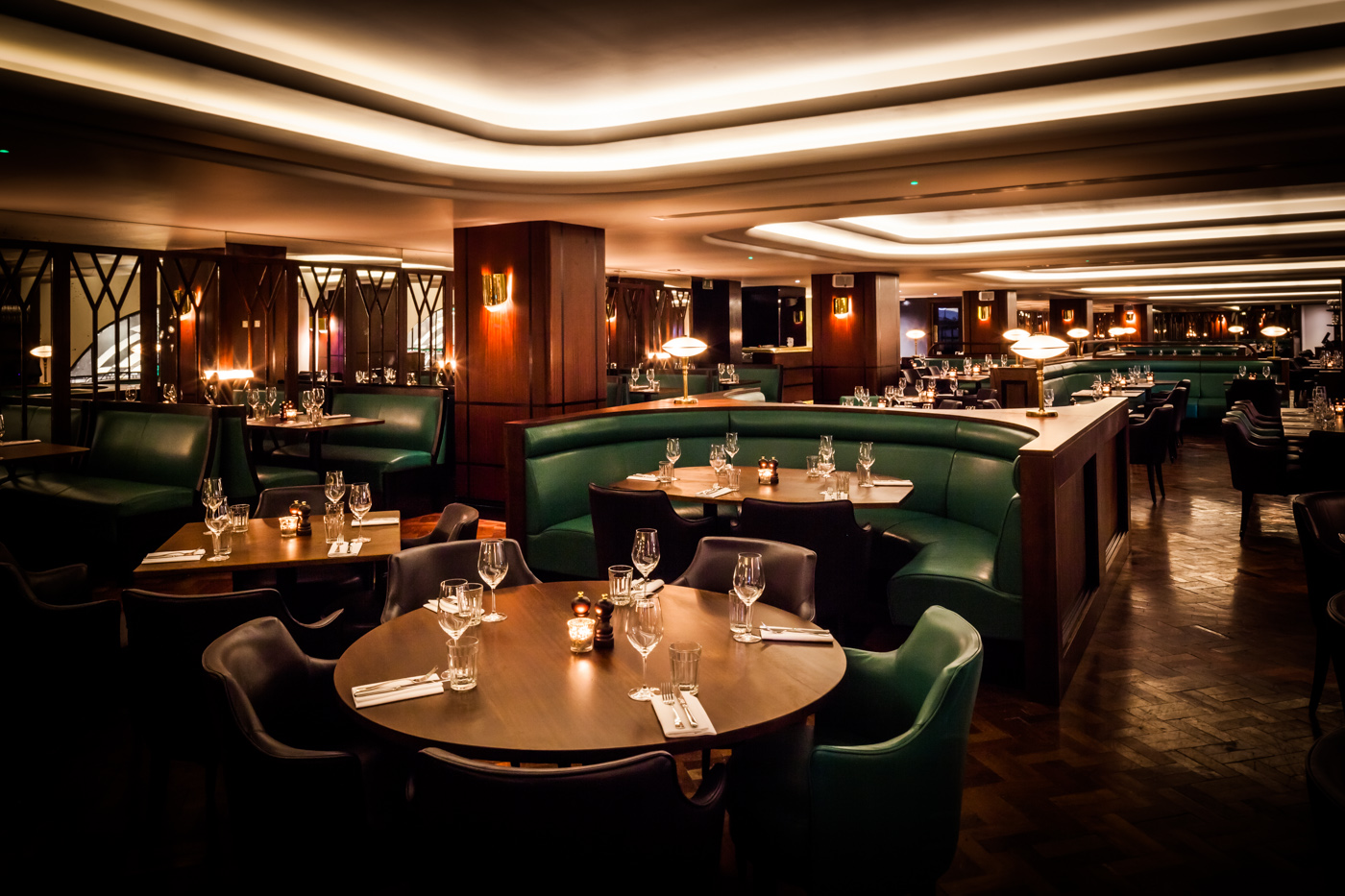
The restaurant decor is very welcoming and relaxing on a cold winter night at St Pancras.  The station itself always creates a romantic image with its combination of history and modernity in the building and shops/restaurants. The brasserie adds even more with its art deco styling, dark wood furnishings embellished with plenty of brass.

The service was good from the first point of contact when I telephoned to book and explain the special dietary requirements of one of my guests (who cannot eat oil or butter). Friendly and helpful best describes the response.

 So, how about the food ?  Most of us went for the special menu which offered 2 courses for £15 or 3 courses for £19. With three of each starters, mains and puddings to choose from the choice was varied and interesting. I went for the cauliflower and nutmeg soup which was delicious, followed by the fresh Haddock with caper and sage butter.  The menu almost didn't do it justice as it also came with smooth creamed potatoes and curly kale (my favourite vegetable of the moment) which had been steamed perfectly.  The folded fillet of Haddock was succulent and glistening (a good sign that it's not overcooked), drizzled with the caper butter and topped with crispy Sage leaves (how did the chef do that ?).
Our 'non-oil diner' was treated to  steamed smoked haddock with crushed new potatoes and curly kale. None of us had room for a pudding.  The food was expertly prepared and presented and this menu represents amazing value for money - could be the best value in London.  We topped it off with a bottle of New Zealand Sauvignon Blanc and with the service charge it worked out about £25 per person.

Sunday, 30 December 2012

Hawksmoor Air Street London

The Hawksmoor Air Street only opened in November but is already attracting good reviews. Unlike the other Hawksmoor restaurants this one doesn't only do great steaks. They have included a nice selection of seafood but not in a 'tacked on' way; they have teamed up with Mitch Tonks from Dartmouth to develop a seafood menu of high quality. The result in my opinion is great meat and equally great seafood with no compromises.
We had the seared scallops which were cooked with white wine , herb butter and sea salt. They were delicious and cooked to perfection. Main course was the monkfish which was well seasoned and grilled over charcoal. The result was succulent and very tasty with sides of fries and spinach with lemon and garlic. Service was friendly and helpful thanks to our waitress Aleksandra who was very knowledgeable about the food. We will go again.


Tuesday, 4 December 2012

Fish Curry

I made this delicious fish curry today and it was simple to make so here are the basics. Cut Tilapia fillets into strips and lay in the bottom of an ovenproof dish with raw shelled prawns. Chop one onion and spread over the fish. Sprinkle with slices of fresh garlic, ginger and sweet pepper. Squeeze the juice of one fresh lime on the top. Add a large jar of Tikka Masala cook-in sauce and leave to marinade in a cool place for an hour or so. Bake in a hot oven for 20 minutes then serve with brown rice, spinach and a slice of lime. Enjoy.